
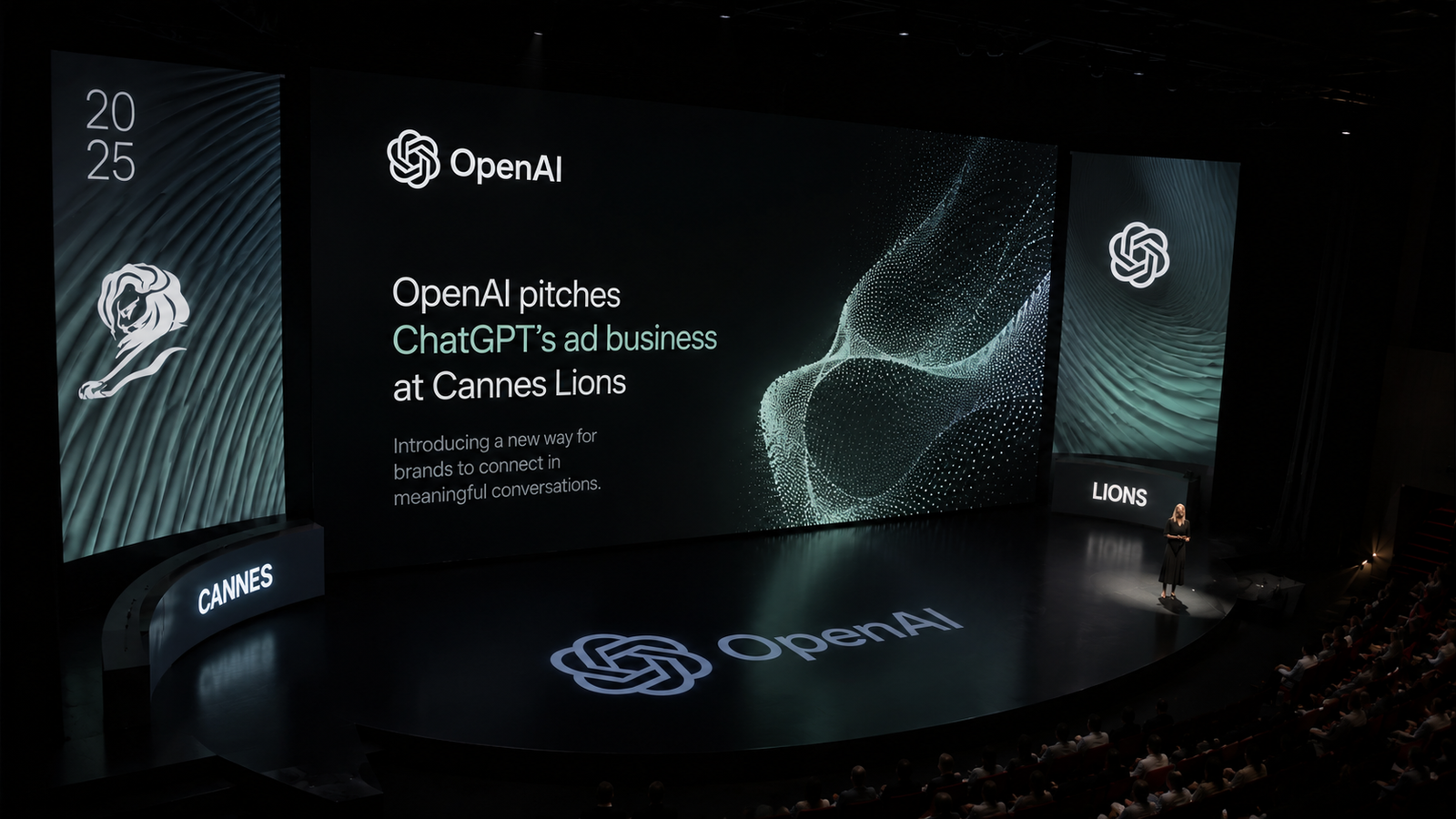
At Cannes Lions, OpenAI showcased ChatGPT’s advertising capabilities to brands while also highlighting Codex. Its AI-powered coding assistant, as the company looks to diversify revenue streams and strengthen its position against rivals Google and Meta.
OpenAI is making it clear that its ambitions extend far beyond subscriptions and enterprise software. At Cannes Lions 2026, the company used one of the advertising industry’s biggest stages to introduce marketers to a new opportunity: advertising within ChatGPT.
As competition in the AI space intensifies, OpenAI is exploring new revenue streams and positioning itself as a potential challenger to digital advertising giants such as Google and Meta. The move signals a broader shift in how AI platforms could eventually fit into the advertising ecosystem.
Bringing Advertising to ChatGPT
While ChatGPT is best known as an AI assistant, OpenAI has quietly begun testing advertising opportunities within the platform. Earlier this year, the company introduced ads in select markets and has since expanded the offering across seven regions.
The advertisements currently appear only for users on the Free and Go plans, while paid subscribers continue to enjoy an ad-free experience. According to OpenAI, the ads are clearly labelled and designed not to interfere with conversations or alter how ChatGPT responds to users.
Dave Dugan, who oversees advertising initiatives at OpenAI, said the company sees advertising as a natural extension of its mission. Revenue generated from ads, he noted, could help support broader access to AI-powered information and tools.
The Revenue Challenge
The push into advertising comes at a crucial time for OpenAI. Building and operating advanced AI models requires enormous investment in computing infrastructure, talent and research.
With billions of dollars being spent annually on AI development, investors and industry observers are increasingly focused on how OpenAI plans to generate sustainable long-term revenue. While subscriptions and enterprise offerings remain important, advertising presents an opportunity to tap into one of the largest digital revenue markets globally.
However, some analysts remain cautious. Convincing major advertisers to shift budgets toward an emerging AI platform may require OpenAI to develop new ad formats and prove that ChatGPT can deliver meaningful marketing results.
Codex Takes Centre Stage
Advertising was not the only focus of OpenAI’s Cannes Lions presence. The company also showcased Codex, its AI-powered coding tool designed to help users build software, websites and applications using natural language prompts.
For marketers, the implications could be significant. Tools like Codex have the potential to accelerate campaign development, simplify creative production and reduce the time needed to build digital experiences.
By highlighting both advertising and developer tools, OpenAI signalled that its future strategy spans multiple industries beyond conversational AI.
A Commerce Opportunity Hidden in Conversations
One of the biggest reasons OpenAI is interested in advertising is the growing volume of shopping-related interactions happening within ChatGPT.
The company estimates that roughly one in five conversations involves purchase-related queries, product discovery or buying decisions. That creates a valuable opportunity for brands to connect with consumers at moments when they are actively seeking information and considering purchases.
OpenAI is also exploring ways to make advertising accessible to businesses of all sizes, including smaller brands looking for new customer acquisition channels.
Taking on Google and Meta
At its core, OpenAI’s advertising strategy is about competing for a share of the digital advertising market currently dominated by Google and Meta.
Rather than relying on traditional display advertising, OpenAI is positioning ChatGPT as an intent-driven platform where ads can appear when users are actively researching products, services or solutions. The approach mirrors the value proposition that made search advertising successful, while adapting it for the AI era.
As AI-powered search and discovery continue to evolve, OpenAI believes conversational interfaces could become an increasingly important touchpoint between brands and consumers.
The Future of AI Advertising
OpenAI’s appearance at Cannes Lions offered a glimpse into how the company envisions the next phase of its business. Beyond subscriptions and software tools, advertising is emerging as a key piece of the growth strategy.
Whether brands embrace AI-driven advertising at scale remains to be seen. But one thing is becoming increasingly clear: OpenAI wants ChatGPT to be more than an AI assistant. It wants the platform to become a place where people discover information, explore products and, eventually, engage with brands in entirely new ways.